Hope for the Best Font for Business Branding
As a small business owner, your brand’s visual identity plays a crucial role in how customers perceive your company. Every detail matters—from your logo to your packaging and even the fonts you use on your website or social media. Hope for the Best, a charming display font with a modern twist, offers a unique way to elevate your branding and create a cohesive look across all your marketing materials.
What Makes Hope for the Best Stand Out?
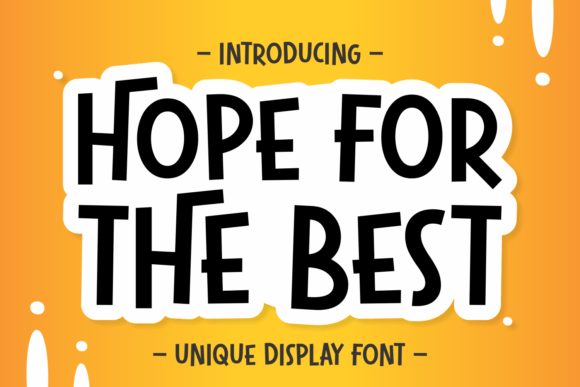
Hope for the Best mimics the look of handwritten calligraphy but with a refined, contemporary feel. Its bold and fluid strokes give it a distinctive visual impact that stands out without being overwhelming. This makes it ideal for headlines, logos, and other design elements where you want to capture attention while maintaining elegance.
The font carries a warm and approachable personality, which is perfect for businesses that aim to build trust and connection with their audience. Whether you're running a boutique, a café, or an online store, this font can help convey the right mood and tone for your brand.
Real-World Uses for Hope for the Best in Your Business
Fonts are more than just text—they’re part of your brand identity. Here are some practical ways to use Hope for the Best in your daily operations:
- Logos and Branding: Use Hope for the Best as your primary typeface for your logo. It adds a personal touch that can make your brand more memorable.
- Packaging Design: Apply the font to product labels, stickers, or packaging to create a consistent and professional look. A handmade candle label or a bakery box could benefit from its elegant style.
- Social Media Graphics: Incorporate it into Instagram posts, Pinterest graphics, or Facebook ads. The font's readability on mobile screens ensures your message is clear and engaging.
- Website Banners and Headlines: Use it for website headers or banners to draw attention and reinforce your brand's visual style.
- Print Materials: From thank-you cards to flyers, Hope for the Best adds a touch of sophistication to printed content.
For example, if you run a coaching business, using this font on your website header or email signature can create a friendly yet professional image. Similarly, a café might use it on their menu to add a sense of warmth and charm.
When to Use Hope for the Best in Your Design Projects
Hope for the Best works best as a display font or headline font. It should be used sparingly to avoid clutter, especially when paired with other text. Consider using it for main titles, taglines, or key messages, while pairing it with a clean sans serif or serif font for body text.
If you're designing a flyer or brochure, use Hope for the Best for the headline and then switch to a more readable font for the supporting text. This approach keeps your design visually appealing while ensuring your message is easy to read.
Readability and Practicality in Real Business Settings
While Hope for the Best has a decorative style, it remains highly readable in most contexts. This is important for small labels, product tags, or digital thumbnails where clarity is key. Test the font at different sizes and on various backgrounds to ensure it looks good in all formats—whether printed or digital.
For instance, if you're using it on a product label, check that the text is legible even when viewed from a distance. Similarly, when applying it to a website banner, ensure it doesn’t become too small or distorted on mobile devices.
Font Pairing Tips for a Balanced Look
Pairing Hope for the Best with the right fonts can enhance your design and make it more visually balanced. Here are a few simple pairings to consider:
- Decorative + Clean: Combine Hope for the Best with a clean sans serif font like Helvetica or Arial for body text. This contrast adds visual interest without making the design feel cluttered.
- Handwritten + Serif: If you're looking for a more traditional feel, pair it with a classic serif font like Georgia or Times New Roman. This combination works well for print materials like menus or thank-you cards.
- Modern Typography + Minimalist: For a sleek and modern look, try pairing it with a minimalist sans serif font like Lato or Open Sans.
Remember, the goal is to create a harmonious balance between the decorative and the functional. Experiment with different combinations to find what works best for your brand.
Practical Advice for Using Hope for the Best in Your Branding
Before committing to using Hope for the Best across your entire brand, test it in different contexts. Try it on mockups of your logo, packaging, and website to see how it looks in real-world applications. This helps ensure it aligns with your brand’s overall aesthetic and feels natural in every use case.
Also, remember to check the commercial font licensing before using it on products, packaging, templates, or client work. Ensuring you have the right permissions will protect your business and help you avoid any legal issues down the line.
Finally, don't be afraid to mix and match. While Hope for the Best is a standout display font, it’s just one piece of your brand’s visual puzzle. Pair it with thoughtful design choices and consistent messaging to create a brand that feels authentic, trustworthy, and professional.